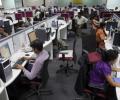
The information technology services sector will see a sharp fall in revenue growth to 12-13 per cent in FY23 from 19 per cent in FY22, ratings agency Crisil said on Thursday. However, the current depreciation in the rupee, strong demand for new age technologies like artificial intelligence, cloud computing and Internet of Things will help the over $220-billion sector maintain a double digit growth, it said in a report. The moderation from 19 per cent to 12-13 per cent will be the highest in the last eight years, it said and attributed the decline to expected tightening of IT expenditure by corporates amid the inflationary headwinds in the United States and European Union (EU), which together contribute almost 85 per cent to the sector's revenue.
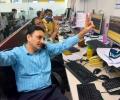
Titan was the top gainer in the Sensex pack, rising over 3 per cent, followed by M&M, Reliance Industries, Axis Bank, TCS, Maruti and Infosys. NSE Nifty surged 122.10 points to 15,885.15.

'Students of Tier-II and Tier III engineering colleges in the south may find 2023 to be one of the toughest years for getting jobs.'

The early bird results for the January-March 2022 quarter (Q4FY22) hint at a slowdown in corporate sector growth in the upcoming quarters. The combined net sales of the 81 early bird companies in the Business Standard sample were up 15.1 per cent year-on-year in Q4FY22; this was less than the 15.9 per cent YoY jump reported in Q3FY22. The slowdown could be much stronger for the domestic market-focused companies, including those in the banking, finance, and insurance (BFSI) space.
Accenture's Q1 FY22 results have sent a wave of cheer among analysts, as the company raised its revenue guidance and said it expects double-digit growth in outsourcing, up from single digit to low double-digit growth expected earlier. Accenture's financial year ends on August 31. The company raised its revenue outlook for FY22 to 19-22 per cent in local currency, up from 12-15 per cent earlier.

Attrition is driving the hiring effort on campuses.

Tata Steel was the top gainer in the Sensex pack, rallying 5.14 per cent, followed by Bharti Airtel, HDFC, TCS, L&T, SBI and Reliance Industries.

Developed markets have performed better than emerging market firms in the top 10 TSR-based rankings, says a BCG report.

The analyst community tracking the Indian IT services industry took special note of Accenture's first quarter (Q1) performance, which showcased the rapid growth of its consulting business that outperformed its outsourcing business. Bookings indicate that the trend will continue. Consulting bookings increased 41.6 per cent year-on-year (yoy) to $9.4 billion, higher than the 17.6 per cent growth in outsourcing to $7.4 billion. The management commentary was also more bullish on the consulting business.

Revenue up 15.8% at Rs 34,261 crore over year-ago period.

Revenue rises 20.7% to Rs 36,854 crore.

The market capitalisation of BSE-listed companies jumped to a record high of Rs 2,40,04,664.28 crore on Tuesday, driven by a rally in stocks that also saw the benchmark Sensex touching its lifetime peak of 53,887.98 points. Rallying for the second consecutive day on Tuesday, the 30-share BSE index closed at a fresh closing peak of 53,823.36 points, a jump of 872.73 points or 1.65 per cent. During the day, it zoomed 937.35 points to 53,887.98 points.

Other major gainers were Tata Steel, Yes bank, Axis Bank, Maruti Suzuki, Tech Mahindra and TCS -- rising as much as 7.09 per cent.
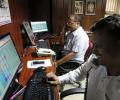
SBI was the top gainer in the Sensex pack, surging around 8 per cent. Tata Steel, Bajaj Finance, HDFC Bank, NTPC, Axis Bank and ICICI Bank also ended with firm gains. On the other hand, TCS, HUL, Bajaj Auto and Infosys were among the laggards.

Their plan to build a product portfolio will discourage global software vendors such as Oracle, Microsoft and Fidelity, among others, from building a strategic relationship with these big Indian IT firms, reports Debasis Mohapatra.

IndusInd Bank, Kotak Bank, ICICI Bank, Sun Pharma, Bajaj Finance and Ultratech Cement were prominent gainers. NSE Nifty rose 176.65 points to 14,867.35.

The global economy may just be entering a new phase.

Most of the large Indian IT services players, such as TCS, Infosys, Wipro, and HCL Tech, have signalled increased offshoring efforts and opting for local hires in the US, primarily to address the immigration-related challenges.
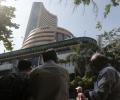
Late selling in blue-chips like Reliance Industries, ITC, Infosys, TCS and Bharti Airtel dragged down the index from the record level to close flat.
The broader NSE Nifty jumped 57.25 points or 0.49 per cent to close at 11,844.10.
Operating Income crosses $ 1 billion; Q4 revenues at $1.2 billion; up 8% Q-o-Q.

Top gainers in the Sensex pack included Bajaj Finance, ONGC, Yes Bank, HDFC, HCL Tech, Tech Mahindra, TCS, ICICI Bank and RIL, rising up to 3.57 per cent.

Axis Bank was the top gainer in the Sensex pack, surging over 13 per cent, followed by ICICI Bank, IndusInd Bank, Maruti, TCS, Kotak Bank and Reliance Industries. On the other hand, Nestle India, HUL, Tech Mahindra and Sun Pharma ended in the red. NSE Nifty zoomed 273.95 points, or 3.03 per cent, to finish at 9,266.75.

After years of losing money on two of the group's biggest bets - global steel business and domestic passenger cars - there are strong signs of a revival in both businesses.
The combined weight of IT companies in the benchmark Nifty 50 index is now at a five-year high of 15 per cent as these companies continue to outperform the broader market.

The S&P BSE Sensex zoomed 500 points to end at 27,627, the highest level in almost 9 months.

Exam centres will not only ensure social distancing among examinees -- there will also be a strong focus on avoiding malpractices and conducting the test with minimal human intervention.

TCS is expected to report a 5 per cent QoQ (USD) growth in revenues, highest in our coverage, while Wipro's IT Services revenue growth could be closer to 1.1 per cent QoQ (USD terms)."

On the Sensex chart, Bajaj Finance, HUL, RIL, ONGC and HDFC emerged as the top gainers.
A financial turnaround in Tata Steel and Tata Motors has come as a shot in the arm for Chandra.

Investors will look at how TCS has performed when it announces the quarter's results on October 13, and the forecast from Infosys on October 14

Analysts expect the company to post 6.2% sequential growth in rupee revenue.
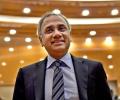
Infosys chairman Nandan Nilekani voluntarily chose not to receive any remuneration for his services.

Overall, Tata Steel becomes the seventh non-financial firm, including four oil PSUs to report quarterly revenues of Rs 50,000 crore.
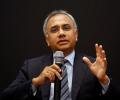
Infosys CEO Salil Parekh has got a massive 88 per cent jump in annual remuneration to Rs 79.75 crore, making him one of the highest-paid executives in the country. The software services firm has sought shareholders' approval for the reappointment of Parekh as chief executive officer and managing director for a second five-year term beginning July 1. According to the company's annual report released on Thursday, Parekh, 58, took home a salary of Rs 71.02 crore in the fiscal year ended March 31, 2022.
In 2017, when Infosys announced that Salil Parekh would be its next chief executive officer (CEO) and managing director (MD), very few in the industry or the analyst community doubted his ability to bring the company back to a healthy growth trajectory, improve morale within the company and, more importantly, win the promoters' trust and investor confidence. There were reasons for this confidence. He was not only the deputy CEO of the Paris-headquartered IT services major Capgemini, but also one of the only non-European faces on the executive board of the company.
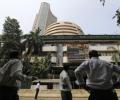
Other losers included HCL Tech, Yes Bank, IndusInd Bank, TCS, ONGC, Bajaj Finance, PowerGrid, Vedanta, Asian Paints, NTPC and Hero MotoCorp, which shed up to 4.07 per cent.

Here's a look at how key Tata group companies fared under Cyrus Mistry's stewardship.

Industry experts are of the opinion that the spurt in recruitment happened as IT services firms went aggressive on hiring in anticipation of a strong demand environment.

After 3 weeks of consecutive rally, this week was a breather for the index, which corrected by almost 1.5%.
